Israel Controls 65% of Gaza as Voters Head to Polls
Gaza residents face the election with limited expectations, citing near-daily strikes and the destruction of more than 80% of buildings despite a ceasefire.
By Mason Reed ·
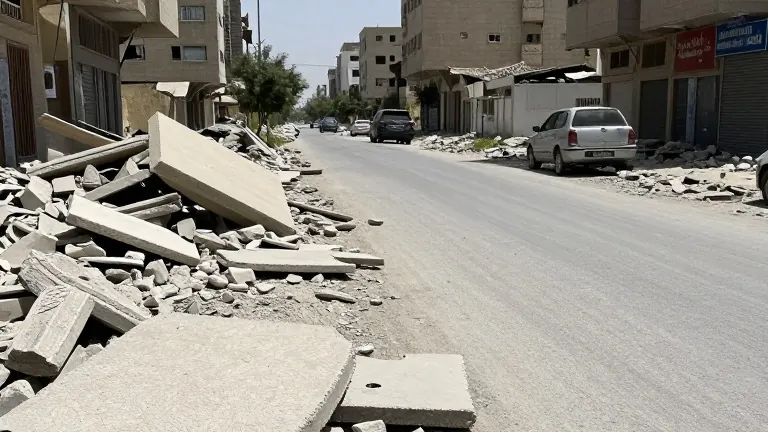
Palestinians in Gaza are facing a critical Tuesday vote in Israel with little confidence that the outcome will change their daily reality. Although a ceasefire has held since October 2025, residents report that air strikes continue almost daily and a siege keeps basic goods scarce. The election is being framed by the war, with Prime Minister Benjamin Netanyahu facing criticism for security failures before the attacks of October 7, 2023.
The stakes involve the physical control of the territory. Israeli forces currently hold approximately 65 percent of Gaza inside the designated Yellow Line. More than 80 percent of buildings in the territory have sustained damage, and about two-thirds of those structures are completely destroyed. This level of destruction makes reconstruction seem distant to those living through the aftermath.
Mohammed Eliyan, 36, was displaced from the Jabalia refugee camp and now resides in Deir el-Balah with five children. He supports Gadi Eisenkot, a former military commander and Netanyahu's main rival, but admits he does not expect a dramatic improvement. Eliyan stated that the Israeli government remains an enemy and hopes only for a leadership that is less harsh. He fears that a second term for Netanyahu's Likud party would bring more war and displacement.
Islam Salem, 41, a father of three displaced from Beit Lahiya, believes the election primarily serves Israeli interests. He argued that the approach to Gaza will remain consistent under any government. Salem pointed to the 65 percent territory control as evidence that policy has not shifted and doubted that reconstruction would begin soon. He described his family's situation as one of living day by day after their worst fears have already materialized.
Hanan Abu al-Maaza, 57, has been displaced more than 12 times during the conflict. She views the vote through the lens of fear, dreading worse treatment from the next administration. Abu al-Maaza said a Netanyahu defeat would improve her chances of returning to her home in Beit Lahiya. She expressed exhaustion with the destruction, noting that there is nothing left to destroy yet the suffering persists.
Manar Owaida, 23, and Mousa Ali, 33, both displaced from northern Gaza, also favor Eisenkot over Netanyahu. Owaida, now in Gaza City's Tal al-Hawa neighbourhood, fears Netanyahu might start a wider regional war to relieve domestic pressure. Ali, a father of four, highlighted the importance of the Yellow Line for displaced people seeking return. He hopes Arab parties gain enough strength to influence the next government. Both men expect a Netanyahu win to prolong displacement and control around the line.
Source: Al Jazeera