Taliban forest patrols aim to stop illegal logging in eastern Afghanistan
A 1,000-man force has planted 126 million seedlings since 2021 to protect remaining woodland and reduce flood risks in the country.
By Louis Bennett ·
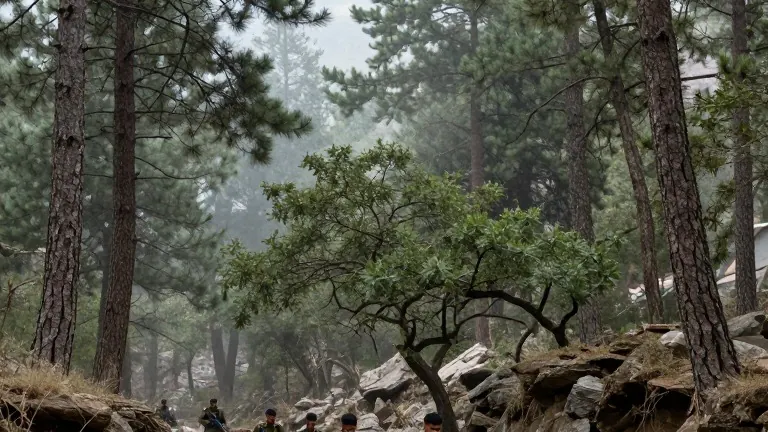
A special police force is patrolling the mountains of eastern Afghanistan to stop illegal logging and protect the country's remaining forests. The Taliban government established these Green Units to safeguard woodland areas that have been severely reduced by decades of conflict and climate change.
Afghanistan has lost an estimated 50 percent of its forests since 1979, according to Mohammad Nasir Shalizi, a research assistant professor at North Carolina State University. The U.N. Food and Agriculture Organization notes that forests and shrubland now cover just 2.8 percent of the country, down from a historical high of about 38 percent when including woodland areas.
Sher Mohammad Hatami, spokesperson for the Ministry of Agriculture, Irrigation and Livestock, stated that authorities have planted 126 million seedlings and cuttings in the five years since the Taliban seized power in 2021. Mohammad Halim Rafi, spokesperson for the National Statistics and Information Authority, reported that forest cover has increased by 427,000 hectares, or 1.06 million acres, over the past 15 years.
The patrols operate in provinces like Kunar, which borders Pakistan and retains sizable forests. Each unit consists of ten men who patrol for 10 to 12 days at a time, often working with local residents. Hatami said approximately 1,000 men serve in these forest patrols across the country.
Sgt. Khair Ul Rahman, a 22-year-old member of a Green Unit in Kunar, said he can now provide full assurance that no one is currently able to cause harm to the forests. The unit protects pine, oak, and cedar trees from being cut down illegally. Cutting live trees is strictly prohibited, and felling dead trees requires a permit, according to Maj. Faridullah Dehqan, a Kunar police command spokesperson.
Abdul Hadi Achakzai, head of the Environmental Protection Training and Development Organization, explained that sparse tree cover is raising temperatures in Afghanistan. Tree roots prevent soil erosion, which is critical in a country where avalanches and flood-triggered landslides often claim hundreds of lives. Apoorva Oza, the global program lead for agriculture and climate change at the Aga Khan Foundation, described forest regeneration as a life-saving intervention for communities living below treeless slopes.
Shalizi cautioned that high planting numbers do not guarantee healthy forest regeneration. He noted that mortality rates for planted trees are often very high because authorities do not always check on survival. The main threat now is gradual degradation from mismanagement, such as livestock grazing on saplings, which patrols do not fully address.
The Green Units also conduct community outreach to educate locals about the importance of forests. Rahman said the group gathers people in forested areas to discuss the harmful consequences of cutting down trees. He noted that the public awareness campaign aligns with the teachings of the Prophet Muhammad, making obedience a mandatory duty in an Islamic society.
The previous U.S.-backed government also controlled logging, but a wood-smuggling trade flourished across the Pakistan border. Current authorities say their crackdown has curbed that smuggling. Afghan officials were invited to attend the U.N. climate summit in Turkey as observers for the second time since the Taliban came to power.
More News · Baltimore news · Report a business · Got a Story?