Rutgers expert: Bleach is best for sanitizing cutting boards
Food safety research suggests vinegar and peroxide are less effective than bleach for killing bacteria after washing.
By Mason Reed ·
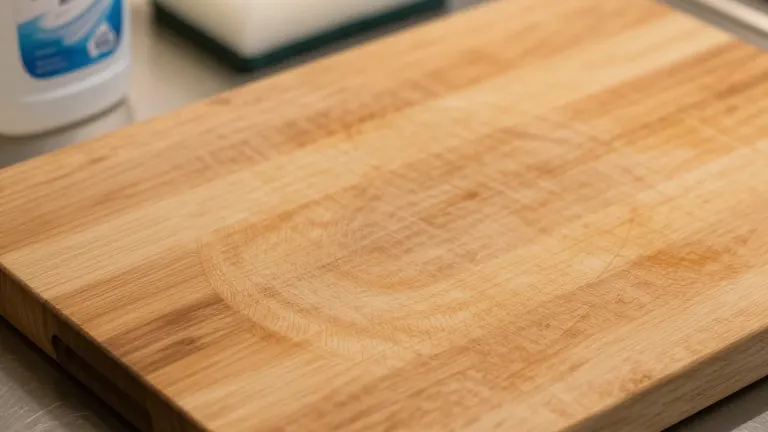
Donald Schaffner, a professor of food science at Rutgers University, says bleach is the most effective agent for sanitizing home cutting boards.
Schaffner studies how bacteria move between surfaces. He notes that vinegar and hydrogen peroxide are not as effective as bleach for killing bacteria. He recommends diluting bleach according to bottle directions after cleaning a board with warm, soapy water.
The method for cleaning depends on the material. Schaffner sanitizes his boards after preparing raw meat or poultry. He uses boiling water, the dishwasher sanitize cycle, or bleach. He saves plastic boards specifically for raw proteins because they can handle the dishwasher. Wood boards should be washed by hand to prevent warping or cracking.
Research has changed how experts view wood versus plastic. In the 1990s, Dean Cliver, a food safety researcher at the University of Wisconsin-Madison, found that bacteria pulled into wood did not multiply and eventually died off. Schaffner said this work showed wood was not as risky as previously thought. Wood also contains natural antimicrobial compounds.
Nicole Papantoniou, senior director of the Kitchen & Cooking Lab at the Good Housekeeping Institute, uses both materials. She favors composite boards made from wood or paper fibers bonded with resin. She said composite boards are light and hold up well. Dave Benson, CEO of Epicurean, said knife cuts in composite boards stay open, making them easier to clean than plastic.
Glass, marble, and slate are not recommended for cutting. Papantoniou said glass slides, breaks, and dulls knives. Marble and slate look good for serving but damage blades. Rubber boards are common in restaurants but less common for home use.
Wood boards require regular maintenance. Lisa Bosio, vice president of group marketing at John Boos & Co., said wood should be oiled once a month with food-safe mineral oil. Noah Pinsonnault, a cleaning reviews analyst at the Good Housekeeping Institute, suggested using 3% hydrogen peroxide for stains and a baking soda paste for garlic odors. Schaffner replaces boards when they become hard to clean visibly. Papantoniou tosses boards that warp, crack, or develop deep grooves.
More News · Baltimore news · Report a business · Got a Story?