Five Baltimore County colleges donate surplus meals to fight food insecurity
Student groups at Loyola, Towson, Goucher, Stevenson, and Baltimore City Community College recovered over 480,000 pounds of food for local fridges.
By Kavya Sharma ·
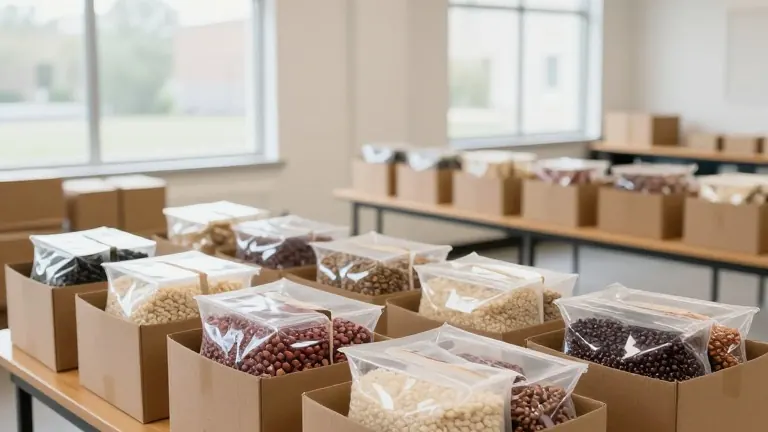
Five colleges in and around Baltimore County have recovered more than 480,000 pounds of surplus food for local distribution since 2011. These institutions participate in the Food Recovery Network, a student-led initiative that diverts edible meals from campus dining halls to community refrigerators. The program addresses a gap in local food access while reducing the volume of edible food sent to landfills.
The network originated at the University of Maryland, College Park, in 2011. Students there observed large quantities of edible food being discarded weekly from dining facilities. The group formalized its efforts into a national nonprofit. Today, it operates hundreds of chapters across the United States. Its primary function is to coordinate the collection and donation of perishable items from higher education institutions.
In the Baltimore region, five active chapters manage this recovery process. These include Towson University, Goucher College, Stevenson University, Loyola University Maryland, and Baltimore City Community College. Each campus has distinct recovery totals based on its founding date and dining scale. Towson University leads the local group with 64,295 pounds recovered. Goucher College has accumulated 19,320 pounds since 2013. Stevenson University reports 11,881 pounds since 2018. Loyola University has recovered 5,027 pounds since its chapter launched in September 2025. Baltimore City Community College has recovered 1,563 pounds since July 2026.
Loyola University operates its distribution center at the new York Road Community Center. Volunteers gather on Mondays and Thursdays to package items such as grilled chicken, salmon, rice, and beans. The group processes approximately 150 pounds of food per session. These meals are placed in a free grab-and-go refrigerator located at 5104 York Road. This site is part of the Bmore Community Fridge Network, which maintains 38 refrigerators across the city.
Traci James, who moderates the Loyola chapter, notes that dining halls often leave 10 to 42 trays of food uneaten from their largest buffet. She states that the donated food is typically claimed within an hour of placement in the fridge. James identifies a lack of grocery stores along the York Road corridor as a key barrier to healthy food access for local residents. She describes this condition as food apartheid, a term she uses to explain how historical redlining policies have limited resource access in specific neighborhoods.
James, a Protestant minister, frames the work as part of her religious calling to care for the environment and her neighbors. She encourages community members to donate or volunteer to support the effort. The loyalty chapter is also developing an application to help students locate leftover meals from on-campus events. This tool aims to address food insecurity among the student population as well.
Other local organizations participate in similar recovery efforts. The Baltimore Office of Sustainability estimates that 22 percent of Baltimoreans, or 138,150 people, are food insecure. The office notes that roughly a quarter of waste consists of food. The nonprofit 4MyCity Inc. serves 300 to 350 families daily and distributed 44 million pounds of food in 2025. Its founder, Christopher Dipnarine, confirms that all services are free and open to individual and business donations.
More News · Baltimore news · Report a business · Got a Story?