Credit card debt rising as grocery prices hit new high
A quarter of shoppers are struggling to pay off food purchases, while discount stores gain ground and traditional supermarkets face pressure.
By Mason Reed ·
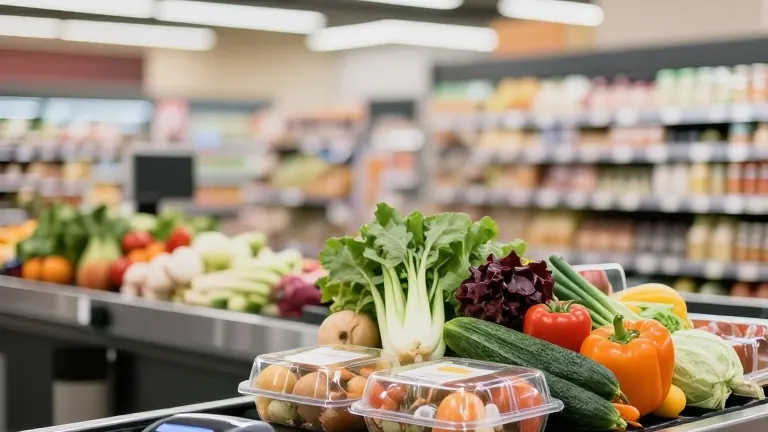
Grocery prices have climbed 32% above 2020 levels, according to the Bureau of Labor Statistics. This increase is forcing many households in the United States to rely on credit to buy basic food items. The cost of living has pushed a significant portion of consumers to change how and where they shop.
Discount grocery chains are seeing a surge in market share. Aldi, Lidl, and Food 4 Less are attracting more customers, which puts pressure on traditional supermarkets like Kroger. David Rinaldo, the chief operating officer at Aldi, said the stigma around discount stores has faded. Aldi is on track to open 150 new stores this year. Rinaldo noted that shopping at limited-assortment discount grocers has become a mainstream habit for many people.
A major draw for these stores is their private label products. These items account for 92% of Aldi's shelf space. Rinaldo explained that private label brands have grown faster than national brands for nine of the last ten years. These products are manufactured specifically for discount retailers and are no longer viewed as generic low-quality options.
The method of payment is also shifting. A recent survey by the Urban Institute in Washington, D.C., found that about 35% of consumers now use credit cards to buy groceries. However, 25% of those customers are having trouble paying off that food debt. Cassandra Martinchek, a senior researcher associate at the Urban Institute, described the situation as a substantial share of families turning to credit and taking on debt in the process.
Many shoppers are also using Buy Now Pay Later apps such as Klarna, Affirm, and Sezzle. One in ten consumers uses these services for groceries. More than a third of those shoppers have missed a payment. Martinchek said this strategy can help meet immediate needs but may have consequences for future financial stability.
Jordan Williams, a mother in North Carolina, experienced this difficulty firsthand. She taught English at the University of North Carolina at Greensboro and worked as a social media influencer. She used a Buy Now Pay Later app for groceries before she got engaged. As a single mother, she fell behind on payments and found her account locked. Williams said she had to pay off the entire balance before she could use the app again. She noted that after 30 days, late payments started to affect her credit score.
Williams said she could never afford to buy the groceries she needed because she was busy paying off the last batch. She described the experience as a rat race where she was always owing money. She is planning a potluck-style Thanksgiving dinner this year. This approach allows friends and family to pitch in, making the meal more affordable for everyone involved.
The increase in grocery prices is expected to slow by next Thanksgiving. However, current prices remain high compared to recent years. The Norman Rockwell image of a family feast is becoming less common for many households. Consumers are stretching their budgets until payday, which often falls on the 28th of the month.
More News · Baltimore news · Report a business · Got a Story?