Record 55.7% Turnout Recorded in Israel as Vote Decides Netanyahu's Future
The highest participation rate in Central Elections Committee history occurred during the first Knesset election since the October 7 attacks.
By Kavya Sharma ·
Israelis cast ballots at a record pace on Tuesday, with 55.7% of eligible voters having submitted their ballots by 4 p.m. The Central Elections Committee identified this as the highest turnout rate since it began tracking participation data. Approximately 5.3 million people voted out of the roughly 7.3 million Israeli nationals who were eligible to participate in the election.
The vote marks the first parliamentary election since the Hamas attack on October 7, 2023. Prime Minister Benjamin Netanyahu described the coming days on Sunday as a fight for the existence of the country. However, political analysts told the Jewish Telegraphic Agency that the election centered on domestic concerns. They stated the vote functioned as a referendum on the future of Israel as a liberal democracy and on the accountability of the leaders in power during the attack.
Udi Sommer, a professor of political science at Tel Aviv University, characterized the contest as a test of Israeli democracy. He noted that voters were assessing Netanyahu’s performance and the responsibility of those who held office when the October 7 events occurred. The core question for voters was whether Netanyahu’s coalition of far-right and ultra-Orthodox parties should remain in power or if a change in leadership was necessary.
Former army chief Gadi Eisenkot leads an ideologically diverse group of opposition parties challenging Netanyahu’s bloc. Tani Frank, director of the Shalom Hartman Institute’s Center for Judaism and State Policy, said the election carries high stakes for both sides. For Netanyahu, the vote represents a final window to secure strategic gains, including completing operations in Iran and expanding the Abraham Accords during the remainder of the Trump administration.
For the opposition, the election is framed as an urgent effort to protect international standing and restore effective governance. Frank added that the change bloc aims to address the growing Haredi community and ensure its fuller integration into Israeli society. The outcome will depend on which party leaders can assemble a parliamentary majority, although Israelis do not vote directly for the prime minister.
Public opinion polls published Friday projected that neither main political bloc would secure the 61 seats needed for a majority in the 120-member Knesset. Most final polls placed Netanyahu’s bloc at around 50 seats. Eisenkot’s Yashar party and its potential partners appeared better positioned but still fell short of the majority threshold. The two Arab-majority political groupings, the Joint List and Ra’am, are projected to win a combined 14 or 15 seats.
Neither Arab grouping is expected to join a government led by Netanyahu. Analysts believe one or both groups could support an opposition-led minority government, though the terms of any such arrangement remain uncertain. Three other parties, including Amcha Yisrael, the Reservists, and the Haredi Public Party, are hovering near the electoral threshold. Each must win at least 3.25% of valid votes to enter the Knesset.
Frank said the most likely scenario is that neither bloc wins a clear majority. He noted that a key question is who remains in power if Israel heads to another election. Netanyahu’s aim would be to stay on as prime minister during additional rounds, as happened in 2019 and 2020. The change bloc would need to increase its numbers enough to replace the government without depending on Arab parties, particularly the Joint List.
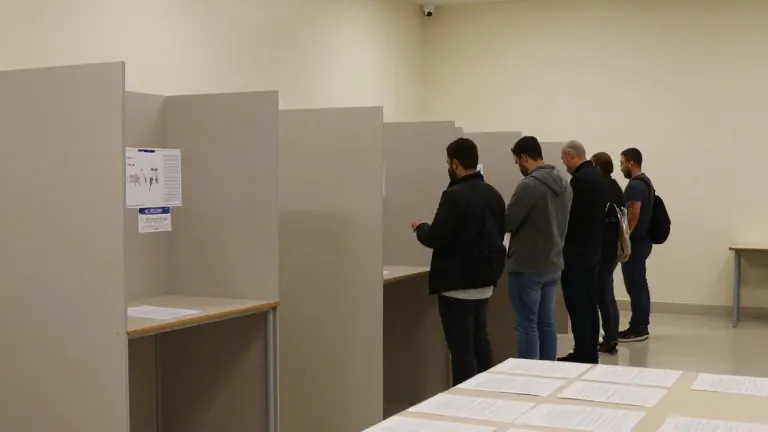
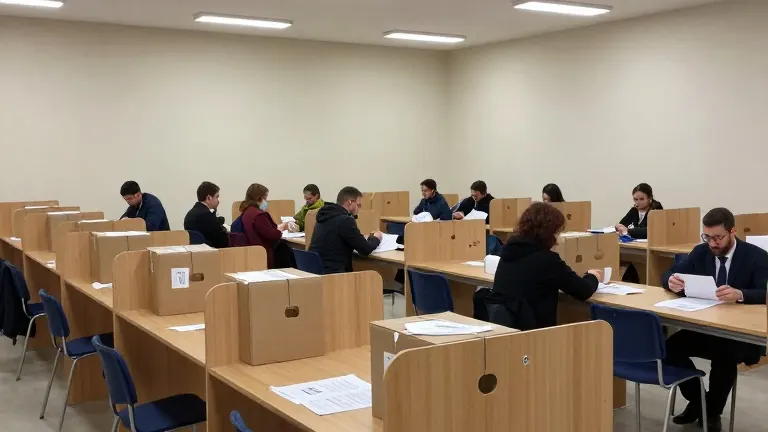
Election Day is a national holiday in Israel, with most workplaces and schools closed. Shops and entertainment venues remained open, with some stores offering sales that gave the day a celebratory feel. The election committee set up 12,018 polling stations across the country. Around 18,000 ballot boxes and 450 million ballot papers were printed for the event. Approximately 20,000 police officers were deployed nationwide to ensure voters could safely reach their assigned polling stations.
Source: Baltimore Jewish Times · original report published
More World · Baltimore news · Report a business · Got a Story?