U.N. expert Francesca Albanese exits Costa Rica after 50-hour airport standoff
Immigration officials blocked the special rapporteur at San José airport over a national security alert, forcing her to accept a degree by video call.
By Kavya Sharma ·
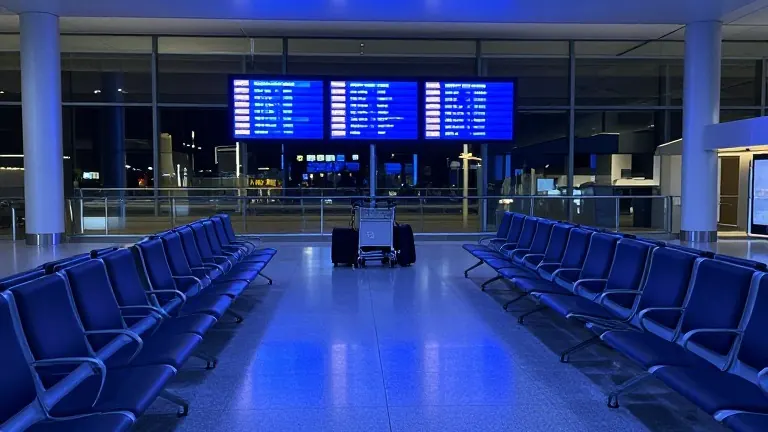
San José, Costa Rica. Francesca Albanese left the country on Saturday after spending more than 50 hours at the airport.
The Italian lawyer is the U.N. special rapporteur on the Israel-occupied Palestinian territories. She had flown in from Paris on Thursday to receive an honorary degree from the University of Costa Rica. Immigration officers stopped her at the gate. They said she was the subject of an international alert over alleged ties to terrorism. The officers did not say who issued the alert. They also did not offer evidence.
Albanese rejected the accusation on X on Friday. “Defending human rights is not terrorism,” she wrote.
She called for an investigation into whether the ban linked to sanctions the Trump administration imposed on her last year. Those sanctions barred her from entering the U.S. and from using U.S. banks. The sanctions followed accusations that she worked with the International Criminal Court to pursue cases against Israeli and American citizens.
By the time she accepted her honorary doctorate from the University of Costa Rica by video call, the Constitutional Court had issued an order. The order blocked officials from deporting her while they reviewed a legal challenge. Late on Friday, the court let her leave the airport to rest at a hotel before her flight to Mexico. The entry ban stayed in place, but she could depart on her own terms rather than be forced onto a plane back to Paris. Immigration took about six hours to let her go to the hotel. Albanese finally left the airport shortly after midnight.
She boarded her flight to Mexico hours later. In a live video from the plane, she thanked the people of Costa Rica. “I just want to say to the people of Costa Rica, you don't have to apologize to me,” she said. “In a way, you are the ones most in shock over everything that happened.”
Costa Rica's right-wing government accused the court of overreach. Rodrigo Chaves, a former president who now serves in the Cabinet of President Laura Fernández, called it “yet another usurpation by an increasingly arbitrary judiciary.” Albanese urged Costa Ricans to defend their courts. “You have something extremely precious, an effective and independent judiciary,” she said. “You have to protect them, the judiciary and the university. Both are under attack.”
Three former Costa Rican presidents criticized the move. The group included Nobel Peace Prize laureate Óscar Arias. The country's ombudsman's office said holding her at the airport showed officials' “ignorance” of her immunity as a U.N. expert. Volker Türk, the U.N. high commissioner for human rights, said the situation was difficult to reconcile with Costa Rica's commitment to human rights. Amnesty International called the government’s actions “shameful.” Israel's U.N. ambassador Danny Danon praised the move on X.
More News · Baltimore news · Report a business · Got a Story?