Baltimore County farmers face end of family legacy
A Missouri couple is the last in their line to farm, illustrating a national trend of aging producers and rising land costs that leaves few successors.
By Mason Reed ·
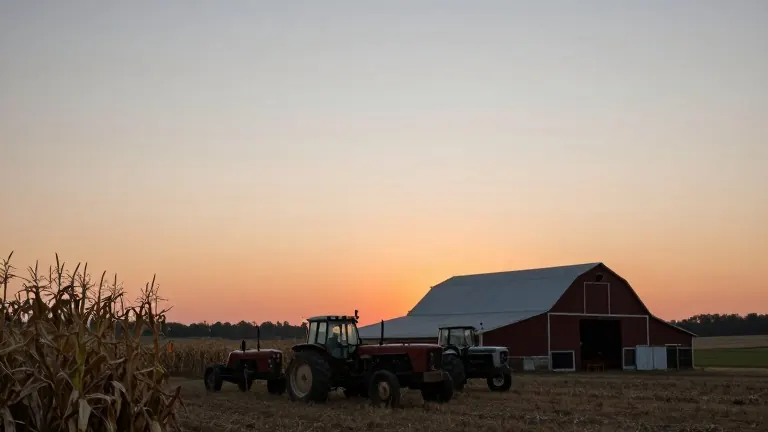
Katie and Gerald Newberry have managed their Missouri farm for nearly 70 years, but they are now the last generation in their family to keep it running.
The couple, who live in Parnell, Missouri, began farming in 1965 with their first purchase of 200 acres. They expanded that holding to 1,000 acres over time, raising cattle, sheep, corn, and beans. Katie, 81, and Gerald, 87, now watch their fields sit mostly idle as they prepare to leave the business.
Their situation mirrors a growing pattern across the country. Small and mid-sized farms have long formed the backbone of American agriculture. However, fewer young people are entering the profession due to thin profit margins and high land values. In Missouri, which ranks third in the nation for the number of farms, the total count dropped by about 10,000 between 2015 and 2024.
Garrett Hawkins, president of the Missouri Farm Bureau, noted that a large amount of productive farmland will change hands as the current generation retires. He emphasized that the key challenge is creating opportunities for the next generation to compete for that land. The state’s total farm income is projected to fall by 17 percent in 2026, according to the Missouri Agricultural Outlook.
The loss of individual farms also affects rural communities. When a farmer leaves, local equipment dealers, feed stores, banks, and veterinarians lose a customer. The community also loses a taxpayer and volunteer. Hawkins described farm succession as a major issue for rural areas.
National data from the U.S. Department of Agriculture shows the country is losing 2 million acres of farmland each year to urban development and infrastructure. The average age of a Missouri producer is nearly 58. The number of mid-career farmers aged 35 to 64 has declined by 9.2 percent since 2017. As farms get larger, the available land often sells to bigger operations rather than new smallholders.
Alejandro Plastina, director of the University of Missouri’s Rural and Farm Finance Policy Analysis Center, said crop production has been less profitable every year since 2023. Large farms can often absorb these losses because their owners hold land without debt. Smaller farmers, however, often carry significant debt. This makes it difficult for them to survive when earnings drop.
The Newberrys currently lease about 850 acres of crop land and 150 acres of pasture to other growers. Plastina explained that paying land rent is a heavy burden for many farmers. This financial pressure has led to a rise in farmers who hold primary jobs off the farm, particularly those under 35.
Missouri has introduced a Beginning Farmer Tax Deduction to help ease entry costs. The program encourages established farmers to rent, sell, or share crops with producers who have less than 10 years of experience. The number of new and beginning producers in the state rose from 41,416 in 2017 to 46,312 in 2022. Hawkins said that while programs help, the state also needs better access to affordable credit and simpler regulations.
Gerald Newberry remembers starting on his father’s farm as a teenager. He still goes out daily on an all-terrain vehicle to feed a few dozen cows. Katie Newberry is in the process of boxing up her belongings. She said the couple will pass the farm to their two daughters, but she worries about what they will do with it. They will simply do what they want with the land, she said.
More Business · Baltimore news · Consumer Alerts · Report a business · Got a Story?