Maryland targets 2029 deal to rebuild American Legion Bridge corridor
State officials are weighing a private partnership to widen six and a half miles of the Capital Beltway, with a financial close possible in early 2029.
By Mason Reed ·
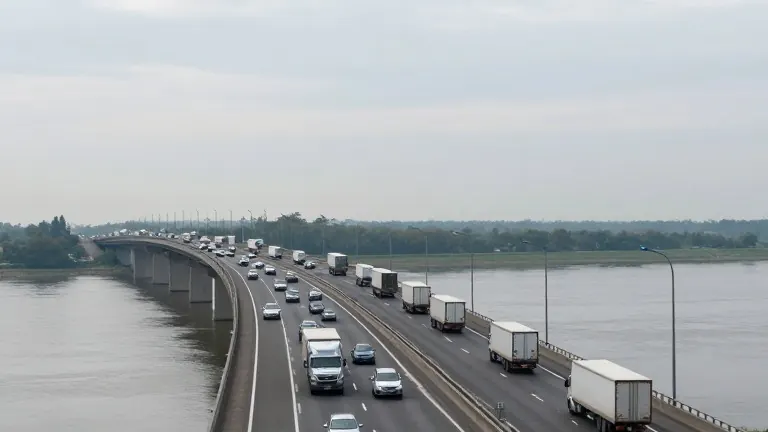
Baltimore County, Maryland. State transportation officials are reviewing a plan to replace the American Legion Bridge and widen a 6.5-mile stretch of the Capital Beltway. The proposal revives a project that was dropped nearly four years ago after a previous private partner withdrew from the deal.
An internal memo from the Maryland Department of Transportation indicates that a public-private partnership is under active consideration. Transportation Secretary Katie Thomson said the document is designed to share information publicly. She expects to hold conversations with developers starting later this month and continuing through December.
The new concept is smaller than the plan first proposed during the administration of Gov. Larry Hogan. Instead of adding toll lanes to a 15-mile section that included I-270, the current idea focuses on widening the Beltway from the bridge to the I-270 spur in Montgomery County. State Highway Administrator Will Pines told Maryland Matters that the shorter route reflects strong opposition in the Rockville area.
The bridge over the Potomac River was built in 1962. State figures show it is at or near the end of its useful life. Approximately 250,000 vehicles cross the structure each day. Officials estimate that drivers face about 12 hours of congestion on the bridge daily. In the three years prior to the study, roughly 1,000 crashes occurred along the proposed widening corridor. One-third of those incidents resulted in an injury or a death.
The original plan carried a price tag of $7.6 billion. Pines stated the smaller project will still cost in the billions, though an updated estimate has not yet been released. The state would seek a federal grant to cover costs a private partner would not recover, such as right-of-way. If the partnership does not offer good terms, the state would work with the governor and the General Assembly on public funding.
The draft memo outlines a specific timeline for the project. By the end of 2026, the state plans to hold an industry forum and meet with potential contractors. Applications for candidate concepts are due in early 2027. The Board of Public Works could be asked to designate the project a P3 in mid to late 2027. The state aims to close on a financial agreement in early 2029.
The previous deal collapsed under the current administration. A consortium led by Australia-based Transurban had agreed to build and maintain the lanes for 50 years. Gov. Wes Moore’s administration questioned the benefit to Maryland, and Transurban eventually withdrew. Pines said the state wants to avoid the open-ended pricing model used before. He pointed to successful Maryland P3s, including the Seagirt Marine Terminal at the Port of Baltimore, as examples to follow.
More News · Baltimore news · Report a business · Got a Story?