Black Friday and Cyber Monday arrive with a surge in package theft and online fraud
Officials urge residents to verify delivery texts and use credit cards as federal data shows a record $15.9 billion in consumer losses last year.
By Kavya Sharma ·
Baltimore County residents can expect a heavy volume of online orders and delivery texts beginning Friday, Nov. 27, and continuing through Cyber Monday, Nov. 30. This period historically brings the highest number of fake delivery messages, lookalike retail websites, and packages stolen from porches in the region. The Maryland Office of the Attorney General has issued holiday consumer alerts warning that artificial intelligence is making these scams more difficult to detect.
The financial risk is high. Federal Trade Commission testimony provided to Congress in March 2026 stated that Americans lost a record $15.9 billion to fraud in 2025. This figure represents an increase from $12.5 billion in 2024. Text messages were the most common method scammers used to make initial contact with victims.
Maryland Attorney General Anthony Brown released a holiday consumer alert in November 2025. The guidance advises shoppers to type retailer web addresses directly into their browsers rather than clicking links in ads or emails. Consumers should also check that websites use https and have clear return policies. The office warns that new sites with prices far below market value are often red flags.
Scammers frequently send fake texts claiming a USPS, UPS, FedEx, or Amazon package is on hold. These messages ask recipients to tap a link to pay a small redelivery fee. The link often leads to a page designed to steal credit card details. Carriers do not typically text consumers to request payment for releasing a package.
Maryland currently lacks a stand-alone porch piracy law. A bill known as the Porch Piracy Act of 2025, or House Bill 210, passed the House of Delegates but failed in the Senate. The Porch Piracy Act of 2026, House Bill 788, also did not become law during the 2026 session. As a result, police charge thieves under the general theft statute. Most stolen packages are valued under $1,500, making these cases misdemeanors.
Shoppers should protect their payments by using credit cards instead of debit cards. Federal law caps liability for unauthorized credit card charges at $50. Debit card protection depends on how quickly a consumer reports the issue, and liability can rise to $500 or more if reporting is delayed. Money sent via wire transfer, gift card, or cryptocurrency is often difficult to recover.
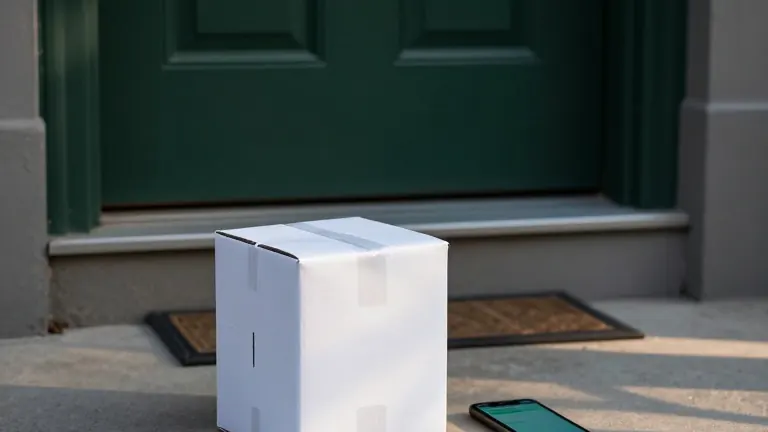
Residents can reduce the risk of package theft by using Amazon lockers, UPS Access Points, or other pickup locations. Requesting a signature for expensive orders prevents carriers from leaving boxes unattended. Installing video doorbells or cameras provides evidence for police and retailers if a theft occurs.
If a package is stolen, residents should check with neighbors and save any doorbell video. They should report the theft to their local police department using the non-emergency line or online reporting system. Contacting the seller quickly is also important, as many retailers will replace or refund the item, sometimes requiring a police report or photo.
If a consumer falls for a scam, they should call their bank or card issuer immediately to dispute the charge. They should also change passwords for any accounts accessed through suspicious links and enable two-factor authentication. Reports can be filed with the FTC at ReportFraud.ftc.gov.
The Maryland Attorney General’s Consumer Protection Division handles complaints at 410-528-8662 or toll-free at 888-743-0023. Suspicious delivery texts can be reported by forwarding them to 7726. Consumers should avoid replying to these texts, even to stop them, as doing so confirms the phone number is active.
More News · Baltimore news · Report a business · Got a Story?