Baltimore Harborplace Deal Promises $2 Billion Economic Activity
The proposed 25-year agreement with MCB Real Estate aims to replace annual property tax losses with over half a million dollars in annual revenue for city services.
By Louis Bennett ·
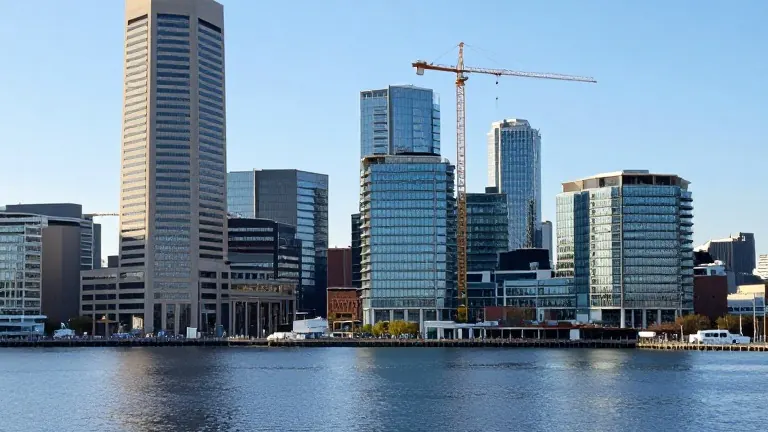
Baltimore Mayor Brandon Scott announced on Thursday that the city has reached a deal with developer MCB Real Estate regarding the renovation of Harborplace. The agreement is scheduled for a vote by the Budget Board on December 2.
City officials stated the project will generate approximately $2 billion in economic activity during its construction phase. Of that total, $26.4 million is designated to go directly to the City of Baltimore. The new arrangement is projected to produce more than three times the tax revenue currently generated by the existing Harborplace pavilions.
The proposed contract consists of four distinct components: a land lease, a substitute tax payment, a community benefits agreement, and a profit-sharing agreement. The city contends that the current properties lose $10 million in value every year. Without intervention, the pavilions would generate only $23,000 in annual property taxes, totaling $4.03 million by 2054. The new agreement guarantees the city a minimum of $543,000 in annual property taxes from these buildings.
These tax revenues will be deposited into the city's general fund to finance projects such as libraries, housing, recreation centers, parks, and schools. Over the 25-year duration of the agreement, the city estimates it will collect $35.36 million in tax revenue. MCB has also committed to investing $10 million into a community fund for downtown Baltimore.
The deal requires that 10% of all constructed units be affordable housing. It also includes the creation of 4.5 additional acres of new parks and public spaces. MCB cannot begin construction until it demonstrates to the city that it has secured the necessary financing for each phase of the project.
Scott stated his primary goal was to secure a favorable outcome for residents. He noted that he has previously seen deals that benefited private developers at the city's expense. He expressed confidence that this agreement will help build an Inner Harbor that serves all residents.
The project still faces legal challenges. In September, a group of residents and business owners filed a lawsuit to block the renovation. The plaintiffs argue that city officials violated the City Charter and zoning laws. One plaintiff, David Tufaro, has also petitioned the Maryland Historical Trust to declare the Harborplace pavilions historical monuments. Tufaro, founder of Terra Nova Ventures, argued that the 1980 opening revitalized the waterfront and attracted over 20 million visitors annually in its early years. He maintained that the structures need modernization rather than demolition.
More Business · Baltimore news · Consumer Alerts · Report a business · Got a Story?