Baltimore cannabis shop sees holiday rush despite industry price cuts
Shoppers at The Forest on the 301 corridor stock up for Thanksgiving amid deep discounts, while industry leaders warn that falling prices are squeezing retailer profits.
By Kavya Sharma ·
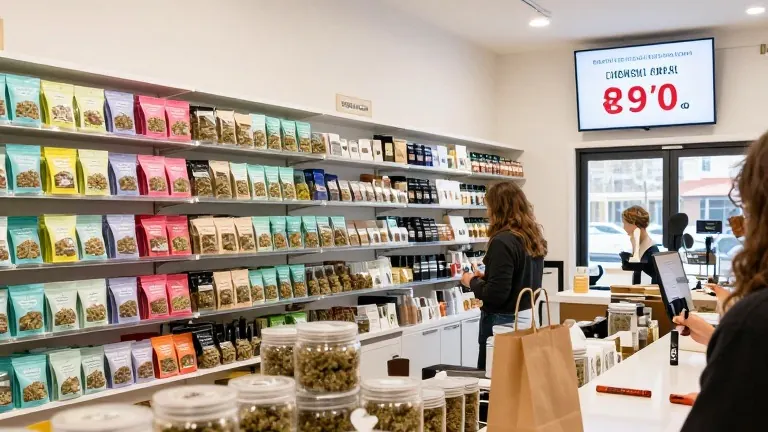
Customers at The Forest, a dispensary in Baltimore, lined up on Monday to buy cannabis products for the Thanksgiving holiday. The store offered discounts of 25% on edibles and 30% for medical patients. Shoppers also received an extra $5 off their purchases if they brought cans of food for the store’s holiday drive.
The week ahead of Thanksgiving is known in the industry as Green Week. Dispensaries across the country report their highest foot traffic during this period, rivaling the sales volume of April 20. The practice of deep discounting has become standard to draw in consumers.
Kelley Vinton, 36, is a regular at The Forest and uses medical marijuana. She said she usually sticks to a strict weekly budget but bought extra items on Monday for a family gathering. Vinton described a pre-dinner tradition with her cousins in the country where they smoke and eat before the main meal.
“You know, you take a little breaky-poo with your cousins, and we live in the country, so we just walk, usually before dinner,” Vinton said. “We smoke a joint, and we get nice and high, and get some munchies and get ready for dinner.”
The legal cannabis market in the United States is worth $30 billion, with legal sales in 24 states and the District of Columbia, according to Whitney Economics. The firm reports that industry revenue declined in 2025 due to an oversupply of plant product and falling prices. This was the first revenue dip since 2014, when Colorado and Washington first legalized recreational sales.
Beau Whitney, the founder and chief economist at Whitney Economics, said the discount model has created a race to the bottom. He noted that while consumers benefit from lower prices and higher quantities, the trend is hurting store operators.
Whitney said consumer habits shifted in 2024 as inflation rose. Previously, shoppers would add more products to reach a fixed spending budget when given a discount. Now, customers use the savings to offset costs for gas and groceries, adjusting their total purchase amount based on their personal finances.
Whitney’s team found a slight rebound in sales this year, with a 5% increase compared to the same period last year. Forecasts for late 2026 and 2027 remain modest. Whitney attributed this to a stable customer pool that has not grown rapidly in recent years, forcing retailers to compete for the same buyers.
Christina Betancourt Johnson, who works at The Forest, said the store stocked edibles, pre-rolls, and non-cannabis snacks for customers waiting in long lines. The store also offered branded giveaways and samples of gummies that contain no THC. A steady flow of customers entered the shop on Monday, some for regular supplies and others for holiday shopping.
Employee Thomas Bourne bagged a vape for a regular customer and joked that the purchase seemed light for the holiday. “Gotta come back for your cousin walk essentials, man,” Bourne said. “’Tis the week.” The customer nodded and said he would return.
More Business · Baltimore news · Consumer Alerts · Report a business · Got a Story?