Army blasts degraded lead azide stockpile in Iowa
The detonation cleared a decades-old chemical supply that had become unstable.
By Mason Reed ·
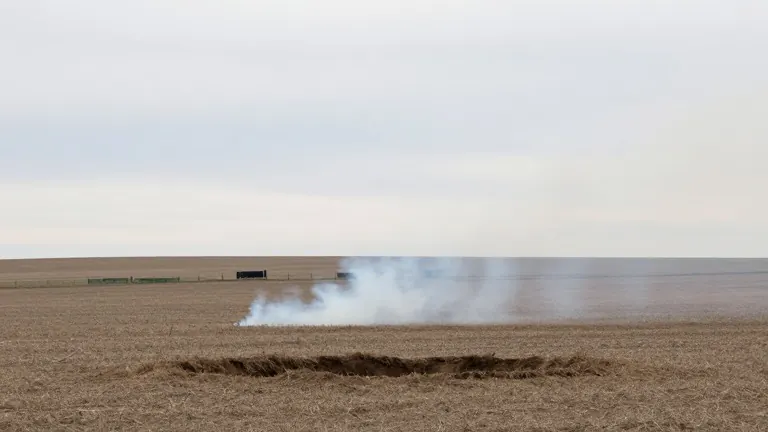
The U.S. Army detonated a stockpile of lead azide in Iowa on Wednesday. The chemical had degraded over time, creating a risk of spontaneous explosion.
Lead azide is a white or colorless crystalline powder that functions as an initiating explosive. It is sensitive to shock, heat, impact, and friction. The compound was historically used in detonators to trigger other explosives like TNT.
The specific supply in Iowa was decades old. Over time, the chemical formed larger, unstable crystals. These larger crystals are more sensitive to external triggers than the original material.
The military stopped using lead azide in the 1980s due to its hazards. Lead is a toxic heavy metal that can damage the brain, nervous system, kidneys, heart, and other organs. It also causes developmental damage.
Officials are currently measuring lead levels in the air, land, and water sources near the blast site. They are assessing potential impacts on residents, crops, cattle, and wildlife.
The Army installed barriers around the blast zone to limit the spread of the resulting plume. The unit also used ballistic gels to absorb lead dust during the detonation.
More News · Baltimore news · Report a business · Got a Story?